How We Activate
Build ownership and capability in the room, not after it.
When activation becomes real
This is where insight and design meet reality.
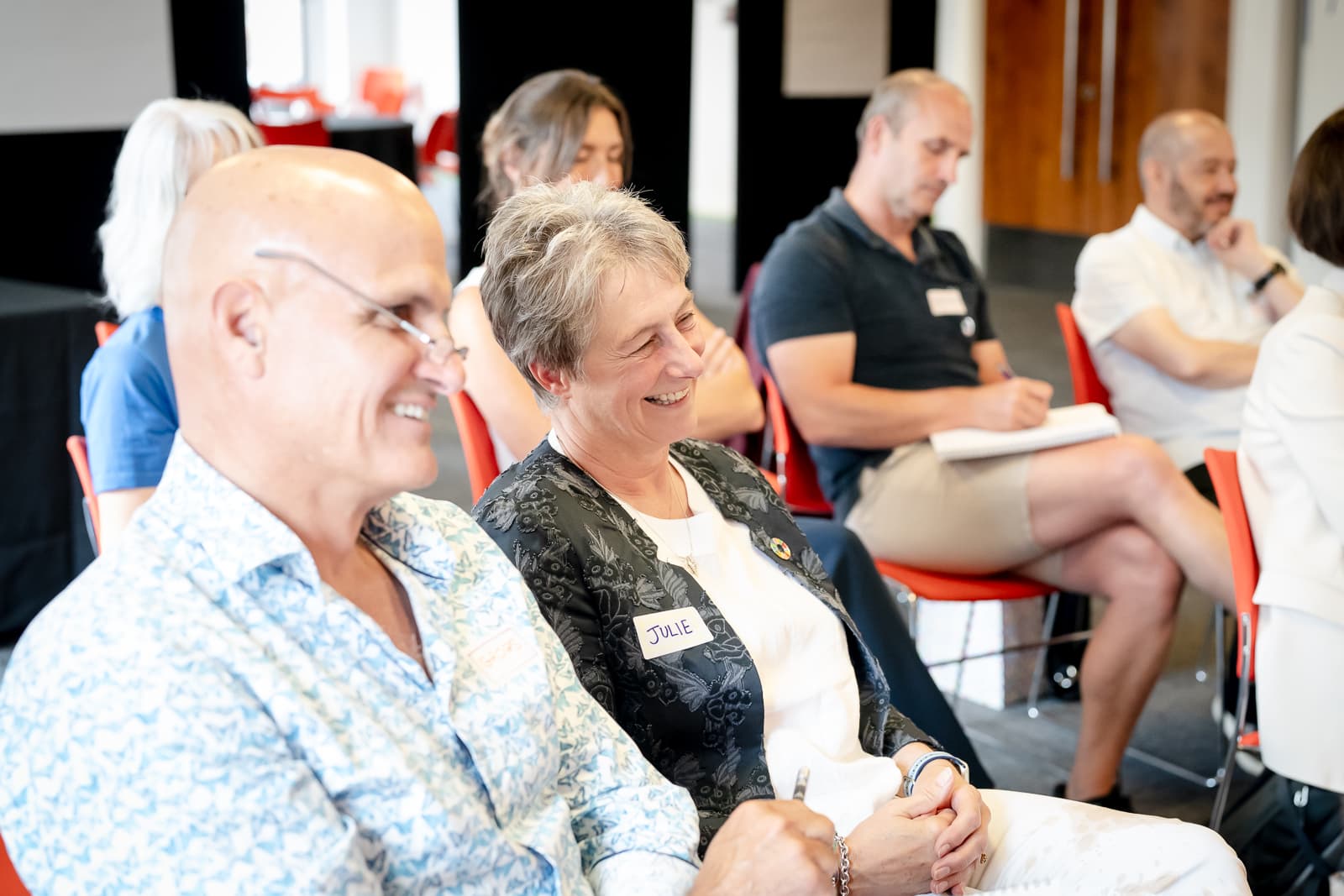
It is the live phase of the work - where we stand alongside leaders and teams in real time.
People arrive busy, stretched and carrying different expectations. There may be urgency. Scepticism. Hope. Fatigue. Often all at once.
Our role is not to deliver something to people.
It is to create the conditions for clearer thinking, honest challenge and shared ownership - especially when pressure is present.

Why this matters
In many organisations, activation is mistaken for activity.
Workshops are delivered. Messages are cascaded. Tools are introduced. It looks like movement. Yet behaviour does not shift - or it shifts briefly, then stalls under pressure.
When people do not feel ownership or agency, even well-designed activation can reinforce disengagement. Energy rises in the room. Then drains in the days that follow.
How you activate determines whether change embeds - or evaporates.
Activation is not about visible motion. It is about building the confidence and capability that make progress hold.
How we activate
We work alongside, not above
We show up as partners - facilitating, listening and thinking with leaders and teams. Authority remains with them.
We build shared understanding before commitment
Before moving to action, we align on what is truly happening and what matters most. Clarity precedes commitment.
We focus on real work, not hypotheticals
Interventions are grounded in live decisions, current tensions and everyday interactions - not abstract case studies. Behaviour shifts in context, not theory.
We build capability in the moment
Confidence, skill and judgement are developed through real conversations and real choices. Learning happens inside the work - not separate from it.
We avoid creating dependence
Our role is to strengthen leaders and teams ability to think and act effectively themselves. Progress should not rely on our presence in the room.
What guides our judgement
Our interventions are shaped by years inside complex, high-pressure and regulated environments where credibility is earned quickly - and lost quickly.
We draw on:
Skilled facilitation and lived group dynamics
Behavioural insight and reflective practice
Understanding of power, influence and decision-making
We use tools where they strengthen clarity - never as a substitute for judgement.
Human discernment remains central throughout.
What clients notice
Clients describe the work in the room as grounded and immediately relevant. They notice:
Conversations that go deeper without becoming heavy
Greater participation from those who would usually stay quiet
Ownership emerging in place of compliance
Many say the difference is practical. The work feels real because it is rooted in their decisions, their pressures and their context.
How this shapes the wider work
Activation is where progress becomes visible. It is also where discipline matters most - because this is where momentum can either build or fragment.
Our Engagement Charter outlines the mutual commitments that make our partnerships work.
Start a conversation
If something feels complex, stuck or fragile - that is often the right place to begin.